Monday, 15 November 2010

Jazz is harder than killing people

I'm working on one of my essays for this year; trying to shunt it out of the way before christmas. Thankfully I hooked onto a book chapter that both explained it perfectly, revealed an incredible new viewpoint to me.

Geoffrey Miller (1999) proposed the cultural courtship model. He suggested that culture was not simply a system for sharing beneficial information across generations; but was a medium through which individuals attempted to attain and retain sexual partners. In short, he was a firm believer that every aspect of what we call 'culture' are all sexually selected traits. The young guy who gets up on stage and blasts out some rock is not increasing his survivability. He isn't dicking around in a bizarre way that needs complicated theories of cultural evolution to explain. No, he is performing one of the human equivalents of the male peacock's tail or of the birds of paradise displays. He is trying his hardest to get some action.

You all know what natural selection is and basically how it works. A flock of eagles swoop in for a meal in their favourite field. They can see white rabbits easier so they get killed much more often than black bunnies. More black bunnies survive, so more black bunnies mate. The heritable (genetic) trait of 'black fluff' is passed on more often so over time there are many more black bunnies than white bunnies. In short, traits that help survival end up being passed on to the next generation.

Sexual selection is different. The sex which puts the most effort into reproduction wants to choose the mates with the best genes. So they look for indicators of genetic fitness. Deer-chicks look for the most impressive antlers in the deer-dudes. Pea-hens look for the most impressive tail. BoP-babes look for the... I dunno. Creepiest sodding dance or display of kleptomania that the males can manage it seems. As a result, the sex (usually males) which puts in the least effort get sex more often if they have indicators of their fitness. Take the peacock tail again; over the generations the peacocks with the biggest tails pass down their genes to the next generation whilst the peahens pass down their appreciation of bigger and bigger tails. The trait gets exaggerated alongside the admiration of it. In this way, traits which don't help survival generally exist in all species because they aid in procuring happyfuntime. Miller suggested that 'culture' in humans was as simple as this; and here is why:

Damn right, shirt.

To study the evolution of any cultural trait, you have to explain the genetic progression through natural and sexual selection of the cognitive abilities of humans to produce those traits. We're not talking particular genres of music, art or literature; we're talking of the concepts in general. The sub-types are heavily informed by external factors. The most effective method for collecting good data is to work out the fitness benefits of particular traits to the individuals who displayed them. Catchpole (e.g. 1995) not only has a really cool second name, but studied a lot of bird species. He has tested hypothesis on the production of birdsong by comparing individual variation in songs with survival and reproduction rates. Whilst natural selection is generally a species-wide change; sexual selection tends to force mass individual variation in behaviour in a sort of witty sexual oneupmanship. Studying these phenomenon in humans has proven to be difficult. Anthropologists (who study humans) have had a lot more experience of the economic, ritualistic and survival characteristics of a group than of their reproductive strategies. After all, wouldn't you be just a little secretive and misleading if a social scientist wanted to include you in a mass study of intimate courtship stuff? As a result, we know a lot more about natural selection in humans than sexual selection; which has kind of fallen off the wagon as far as theories go.

So if the courtship model is to be believed; female humans should select for indicators of fetility, healthy, parenting abilities and 'gene quality' in general, in their mates. Just like in every species, indicators that are too easy or lack in any cost would be too easy to fake by weaker mates. Just like the peacock's tail, the cost in terms of energy, risk and/or long term survivability should be high... So.... purchasing a fast and expensive sports car? Many cues over a whole buch of species are now known to be simple indicators. Lek species dance right out in the open, in the same place, daily. That sort of pattern would make it really easy for a lion, or whatever the hell hunt leks, to grab them in large quanitity. Another pretty cool cue is in some birds who fight like maniacs for a central position in the mating fields. These often occur on islands free of predators, so the fighting abilities of the birdies are in themselves indicators of fitness as opposed to a naturally selected self-defense ability. As sexually selected traits usually impair survival ability, they are usually fairly easy to tell apart.

There is no reason to suggest humans would be any different. Our mate choice strategies should be focussed on sexual indicators that hint at genetic fitness. The most obvious examples of human culture; art, literature, music, creative use of language; they don't have any obvious survival benefit for actions so costly in energy and time. From someone looking from the perspective of indicators; those sorts of wastful displays are exactly what would be expected.

So long as courtship displays act as 'handicaps' to the individual making them, the fine details don't really matter. The peacock's tail needs to be large, heavy and costly to produce to act as an indicator of fitness (crap peacocks couldn't put in that effort). The colours and patterns don't seem to matter so much to peahens. I'm pretty sure Stephen Fry mentioned that Peahens found the spots on the tails the main attractive feature though. Perhaps they take a lot of effort to grow; or he is just wrong.
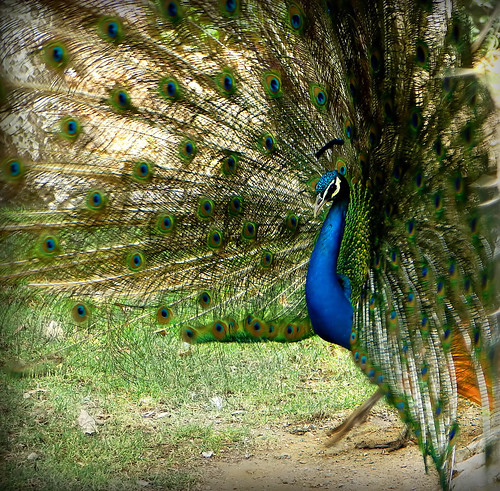
*SWABUMF!* Come to me, woman.

Fisher (1930) came up with the runaway model that I sort of mentioned above. He believed that an attraction to an indicator would become genetically correlated with that indicator. Both the attraction and the trait would get caught up in a positive feedback loop, exaggerating both sides of the same coin. I.e. "Ooh, I like your quite big beard" Next generation: "Ooh I REALLY like your huge beard." As the indicators need only be costly to the individual showing them, they are very hard to predict even between different groups of the same species. For this reason exaggerated traits and attractions to them are likely to be different so long as the groups are seperate. This is a sensible explanation for the huge variation in attractive features across human societies.

According to Miller, and contrary to a suprising number of theorists, culture does not appear as a side-effect of humans having a large brain for their body size. Culture comes in plenty of different formats that involve entirely different processes, and the only obvious underlying features are too close to those of fitness indicators to be ignored. They are self-expressive, they involve costly amounts of time and energy, they don't have any feasible survival benefits, they are unique to humans, they show vast individual variation (as we'd expect from sexual, rather than natural selected traits. The whole point of indicators is to highlight these differences after all). They all involve some or all of health, creativity and or intelligence; and most importantly, they are designed to appeal to other humans. Miller had damn good grounding for creating his courtship model I reckon.

The model has an explaination for why areas of culture have so many traditional and expected basic components. Trying to compare between two courtship displays would be difficult if they didn't share any common features. By following rules such as rhythm and tonality in music, you give listeners an easier time of noticing superior end-products. Grammar and pronunciation could be mediated in large part by this drive to seperate who is good at language and who fails. The following for these sorts of rules might explain why atonal music and abstract artwork remain underdogs in their respective fields. They make it difficult for observers to tell if the producers are any good. Catchpole (birdie man) did a lot of work looking into the combination of basic elements of birdsong into new and interesting patterns. By capturing the attention of potential mates with novel displays, the creativity of the displayer shines. New stories with old words... The summary is that comparable basics allow outsiders to check for quality, whilst novel combinations can still be created to express creativity.

It's really worth noting that sexually-selected behaviours don't have to feel sexy to the 'users'. Miller points out that the behaviours themselves don't tend to come with the instrinsic understanding that that is what they are for. Miller gives the example of the human male beard. Although it is most certainly around through female mate choice, it does not actually contain this knowledge. It just grows and shows the male as having reached sexual maturity. Psychological adaptations are generally no different; switch back to the rock musician I mentioned at the beginning of the post. The impulse to create and perform this stuff begins upon puberty in most cases, and production increases and decreases over time in line with female fertility (we'll see later that pretty much all behavioural indicators follow this pattern). The musician doesn't necessarily notice the reason for their sudden inspiration to learn their instrument, and to play it in places were 'single members of the opposite sex congregate'.  Sexual selection doesn't reduce culture to a basic horny drive, any more than natural selection reduces skill-learning to pure survival. 


To keep this blog family friendly, the hoe has been airbrushed out.
Sexual and natural selection are not entirely separate. Various researchers have described sexual as having hijacked processes that natural selection is already shaping. The incentive for avoiding partners who would produce offspring that would be less likely to survive (and so make the mating worthwhile) is very high. Say, for example, that linguistic skill gave a survival benefit to humans in some way and so was naturall selected for. It seems likely that female mate preference would evolve to find better-than-average linguistic ability a turn on. If we follow the courtship model I've been outlining, then that preference would favour the sexuall selected evolution of courtship displays which showed off linguistic ability as an indicator of fitness (poetry? deep lyrics?). You can apply this to most overt behavioural traits which aid survival. When males 'realise' that exaggerated displays of that ability get them happyfuntime more often, then they'll start showing off; even although the exaggerated versions don't give any survival benefit. Smart-talking might get you out of a tricky situation, but being a great poet wouldn't help you much in a potential beat down.

There are few better pieces of evidence for the courtship model, than Miller's own study in 1999. The extent of cultural production should depend on the age and sex of the producer if those productions are truly sexual indicators. In most/all other animal species that have had their sexual indicators examined: Their indicators become prominent upon sexual maturity, peak at young adulthood when sexual selection is most ferocious, and decline as either parenting becomes more costly or female fertility declines. Perhaps obviously, males should show the indicators way more often than females (who should have little need to display in the same way as men.)

Miller looked at 2000 jazz albums, 3400 modern paintings and 3000 english-language books. He found the ages and genders of the producers when they created the work and plotted it on a graph. Let me show you the graph. Compare it to the pattern of sexual indicators I just spoke about.

They all follow the exact pattern expected of sexual indicators. Who knew that males produced so much more 'art' than females? I would've thought it was the other way round.

It is very important to make this point. Even although human males have massive incentive to display their fitness indicators like f***; females are obviously not the equivalent of peahens. They don't bugger about wearing grey loose clothing and avoid producing any creative work, instead choosing just to off-handedly pick the most impressive male. Given roughly equal numbers of each gender in most populations, they would want to appear attractive so as to avoid repelling any courtship attempts. The costs of male sexual harassment (both great and small scale) has likely pushed females to a very different strategy than that of males. I reckon it is sensible to suggest (and is probably true) that females would be more likely to target certain prospective mates rather than 'broadcast their fertility and attractiveness indiscriminately' like males. By keeping their courtship displays limited to individual males the, often uncomfortable, flirting attempts and perceived leers of men in general would be reduced. This is so obviously the way that females generally do things; if you think of the famous dimorphism between men and women in our society. Men throw themselves out there in an attempt to find a partner, whilst women are much more likely to discretely put all their efforts into one particular person.

....Gotta say; reading an article I agree with, that explains in a sensible fashion why women are the way they are is quite depressing! How do you attract women if you lack in creativity? Lies and luck. Sadface from Radjamaki.

Apply Within.

Females, according to Miller, would be expected to 'court' their partner after a sexual relationship has formed, and even after children have been... erm.. birthed. Their courtship designed to attract his continued attention and investment towards her and their family. The genders have such vastly different motivational systems but have equal capacity for cultural production. It is just that males have incentive to broadcast their productions (enter them into the public domain) whilst females find advantage in keeping it secret and specifically for that special person. Not to be ignored are the values of willpower and morality. Men who show no willpower will gaze lustfully at the slightest glimpse of cleavage. Women who show no morality will ruthlessly tease men they have no intention of getting closer to, just for their own self-esteem and satisfaction. Those belong to a different post, though.

One last point.  The feminist viewpoint of the courtship model suggests that the results are actually reflective of a society that has been, essentially, a partriach for the extent of history. Were that so, feminists would have to explain why cultural displays in humans match the display patterns of sexually selected traits in other species (who do not have any history of male dominance). Personally, I think the best way they could explain it is by saying "Whoops, we were wrong."
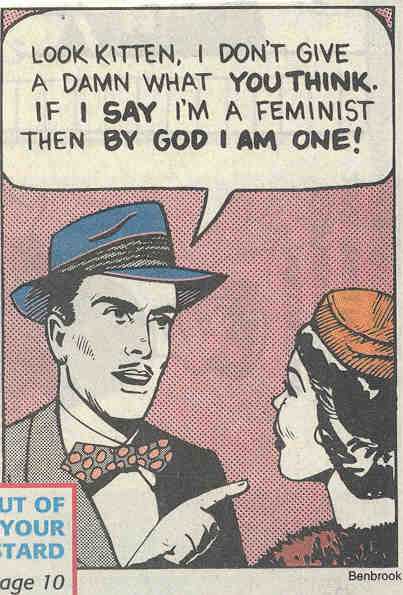
Sweet Hat
Gives me a lot to think about. I hope you find the whole argument pretty interesting :).

P.s. the title comes from a little tidbit I didn't include. A couple of researchers found the homicide rates in certain countries to follow the same patterns as other sexually selected cultural traits in humans; suggesting that they may be exaggerated displays of... I dunno. Masculine aggression and risk taking or something. Anyway, Miller wrote a fantastic sentence in his work:  "While homicide rate typically peaks in the early 20s, the later peak for jazz album production suggests that it takes longer to learn to play good music than to kill someone."

Only a psychologist...

Saturday, 6 November 2010

Fireworks, mirrors, and a stolen afternoon.

I have just finished 'The Book Thief', and I can't stop thinking about it.

The story was set in the depths of Nazi Germany, following the tale of one Liesel Meminger whom I was introduced to as she took a train journey through a snowy wilderness. Crowded into a packed train (at least, in my imagination) the young Leisel watched as her brother coughed and withered; eventually passing into the hands of death. That is to say, the hands of the narrator.

It is a special kind of book that tells a story entirely beyond its setting and characters, and after reluctantly putting it down I've begun to wonder what it was actually about. Death had a very different perspective from a human living in that time. He saw the colours in the sky; red, white, black. He listened to the hum of remembered stories that he had picked up along with the most tragic, and beautiful of souls. In 'The Book Thief' you aren't told about Stalingrad, or of Hitler's Struggle. Instead you see through the hauntingly realistic viewpoint of a girl who would never play the accordion because she could never match the casual joy her father could tease from it. Whose first act of book thievery was performed so that she would never forget where she came from; a last spontaneous grasp to keep something, as if she knew it would be important to her in years to come. In truth, she attained "The Twelve Steps To Gravedigging Success". Death wondered about the apprentice who had let it slip from his pocket. The man who had helped bury Liesel's nameless brother.

"A dance of death, out of a mystery tale"


I'm coming to the conclusion that the story existed to be the frame of a mirror. Constantly during the entire experience I lost myself in the comparisons and contrasts between the way Liesel and death felt and how I did or would. I repeatedly imagined that I was reading an inscription on the frame, only to look down and see a reflection of, say, a family photograph. I would then be guided to remember what I felt about everything in it. It was reading about Leisel's first experience wetting the bed, when she went to her father in shame and apprehension. He simply said "Ah, we'd best clean that up then eh?" took the sheets to be washed, replaced them with fresh ones (nothing says comfort more than smooth new sheets)  and sat with her until she was ready to sleep again. The whole book was spun around these acts of heartening kindness, and it shocked me to realise that is how I remember my own life. I have years worth of diary entries, but when I sum up my life in my head it always comes down to the little moments that left me helplessly, inexplicably glad to be alive.

I'm writing this entry now for a number of reasons; primary among them is that I'm flushed with the emotion that comes with the end of a good book. This is one advantage reading will always have over film for me; writers can take their time to create characters you feel a horrible sense of loss over once you are done. Death described the people he met in terms of what they took in their moments of abandon. Liesel was a book thief. When the Jew who had been hidden in a basement for over a year snuck up for a look; he stole the sky. In the same way, Liesel, Hans, Rosa, Rudy; you've stolen my afternoon, and many fleeting thoughts to come. Thank you for the memories.

I wont look in a real mirror today. I've spent hours seeing a reflection of the incredible emotions this book brought about; I don't see how meeting my own eyes could possibly feel as good as viewing my own mind. An odd thought. As odd a thought as I've ever had.

---------------------------------

Yesterday was Fireworks Night, and I found myself strolling towards Lochee park with two good friends of mine. I'm thoroughly enjoying the raw winter cold and the chance to avoid it by way of fashionable scarf and the sleak winter jacket I bought in C & A in Aachen this time last year. For little over a month now, I've been feeling the loss of what I had in 2009. This time last year I was 5 days away from the most unexpected, and more memorable, kiss of my life. I would be visiting Germany for a christmas under the roof of a wonderful and welcoming family, and I would be smiling fondly at the excitement of it all. This winter I have not been smiling so much. I have had a lot of work to do and friends to help me through it, but in truth I am constantly hoping to stumble upon someone that will give me a chance to remember what love feels like. I think I've reached a point where the deepest of friendships just wont be enough, and that has left me feeling weary and isolated. Yes, I've had a lot to think about, but last night told me something very important.

I especially like the ones that send a thud of noise right through you.

After the incredible fireworks display I was inspired to enlongate the warmth I'd felt watching lightsaber-wielding children play around the legs of spectators, their heads tilted up and their eyes and mouths open. Hopelessly chuckling from the effortless humour and genuine likeability of the people I was with, I suggested we head to my favourite Dundee pub; The Counting House, for a late dinner. We sat round a table with our winter gear on the floor beneath us, shoved underneath to avoid tripping any of the patrons of the incredibly busy venue. The Ale and Cider festival was on so we had the opportunity to grab some bizarre guest ciders (Green goblin, anyone?) to let the food go down. Warm, merry, and with two incredible friends... last night told me something alright.

It told me I was going to be just fine.

Wednesday, 20 October 2010

The exploration of an idea.

Is optimism better than pessimism?

Here's my quandry. Pessimism as a life view has gained popularity in many circles due to the supposed disappointment-buffering qualities. Supporters says that if you never expect anything good to happen, then at worst you are expecting any failures that come along, and at best are pleasantly surprised when something good happens. It sounds sensible in theory, a simple case of calculating probability and outcome. I don't believe it works like this, but I have huge difficulty explaining why. A problem I hope to remedy by putting down on sexy sunset-template paper and trying to structure it for a public forum.

Your choices in life structure your personality. Your goals, perspectives, reactions and opinions are all informed by the way you choose to lead your life. This is why I have such strong views on issues like cosmetic surgery, or on the differences in personality between the physical ideal and those of us who have quirks and traits that we have to learn to accept. I believe that, within reasonable limits, we should all be forced to develop the strength to accept who we are. It's the school bully scenario; you get bullied for being ginger, do you dye your hair or do you learn to stand up for yourself? In the context of adulthood; you gain the view that small tits are ugly through gossip-media. Do you dish out £5000 to inject them with plastic, or do you find some way to accept what you've got?

The majority of people take the first option in most examples of a conflict like this, and that angers me in a very deep way. I can understand and accept the need for children to avoid conflict like that; or for people to give in from time to time and let themselves indulge in some change to make their lives easier. For small, almost juvenile decisions, or for the truly life defining ones however... Gah. The pretty kids at school grew up to be so much more dull than those who had to fight for who they wanted to be. I adore the girl with red hair who has come out the other end to discover that guys appreciate the mix of firey appearance and deep character. I am close friends with the guys who were never confident or talented enough to attract girls easily, and so developed the most striking wit I've ever experienced. I AM the guy who had crippling acne throughout all of high school and was delighted to learn that no one who knew me gave the slightest bit of shit about any of it.

The woman who has surgery just to fulfil some need to have larger breasts? She has looked at the world around her and said "I don't want to be myself, I want to be how they want me" and so taken one step closer to homogenising her society. Instead of, after some hardship and character searching, learning through experience to enjoy who she is; she has removed any need to ever have that conflict. Sigh, wont she be good dinner table conversation? I've taken a simplified example, but it illustrates my view clearly enough.

Of course, my opinions don't apply if you're competing in the 'biggest fake breasts' competition. I'm not kidding, this woman actually won it. 36MM! Bravo.

Let's bring it back to the idea of pessimism, which I think works in the same way. Imagine the situation where a person is going to be sitting an exam in a course that, objectively, they are quite good at. Throughout all of their studying, organisation and motivation-gathering they have chosen to be pessimistic about the whole thing. To begin with, I believe they will try less hard due to a lack of believeable motivation (i.e. "Wow, I might pass this, think of how rewarding that will feel!"). At the same time I reckon they are giving themselves a pre-made denial clause for actually failing (i.e. "I knew I wouldn't pass, there's nothing that could have been done to improve my performance). Being able to say that; being able to immediately blame it on fate or an supposedly unstoppable component of your personality, stops you learning how to properly deal with failure.

The argument to that, is failure just aint easy. God how I know that. I work my ass off to try and continue a fortuitous spree of good grades that I would be crushed to lose. The people who acted rash and lashed out when they failed as younger people had two choices. They could have said "Aaaah why the hell was I ever optimistic? I'll never reach those shining pinnacles of achievement. Next time I will approach it without such determination." Or they could have made the painful choice to try again simply to experience the thrill that came from playing the game properly. True sportsmanship is signified by the man who tries his damned hardest to win, but shakes the hand of the man he lost to, promising a tougher challenge next year. Not the man who sighs and tells his opponent "Acht, I knew you'd win." then only puts in a token effort next time around.

All of this has to be informed by the limits of a person's abilities. I'm quite a fast runner but I wouldn't expect to win against somebody who had actually trained and who had a passion for it. That isn't a case of optimism versus pessimism, but more a healthy injection of realism. In situations where you genuinely are good at something, (your companions, teachers or trainers tell you so) it becomes harder to realistically get away with acting the pessimist.

Pessimists have fewer Lols. Fact.

Those are its hidden flaws. Hidden, because they don't directly affect pessimists themselves. Firstly, a pessimist will often vocalise their lack of faith in their abilities to peers and teachers. The same peers and teachers that expend effort in trying to convince the person they can do something (if you've ever tried and failed to inspire a friend, you'll understand the frustration this can cause. It is eventually difficult to differentiate from attention seeking). Secondly, a pessimist will be unsporting in the same manner I wrote about above, and the pessimist will never develop any capacity to change this part of themselves. They will simply accept any failing of their part to be due to their personality rather than their abilities. Can you see the cycle? Believing that you will fail > failing > strengthening your belief that you will fail > failing...

It isn't broken by succeeding, because any victories will be chalked immediately to luck! Bringing me back to the first part of this post. They wont say "Oh wow! Things are looking up!" That would be optimism. Instead they will go "This won't last...". What a... what a depressing way of looking at life.

The summary of my rant is this: Your choices make who you are. If you choose to fight for character traits you believe in, you not only attain a positive view of yourself, but it is matched by the personality traits that came from the struggle (like determination, self-confidence). If you choose to change who you are in order to escape conflict, you might -with luck- end up with a positive self image, but you wont have the personality traits that will allow it to last. How long until those fake breasts begin to look unsatisfying to the women that have discovered the ease of changing themselves once before? Whilst optimism is paired with disappointments, defeats, wasted efforts; it also comes with the benefits of learning how to deal with competition, stress, adversary. Pessimism by its very nature is the avoidance of having to experience failure. It might give you an easier ride, but you wont learn how to sail if you don't go through choppy waters.

I dislike seeing my friends saddened from a defeat or disappointment; but I know they would never have forgiven themselves had they never really tried in the first place.

So I suppose...optimism, for me. Optimism is the way to go.

Phew.

----------------

For a more academic insight into the ideas of pessimism and optimism, look up locus of control, self-efficacy and Rogers' (1954) views about the differences between the actual and ideal self.

Tuesday, 19 October 2010

Side effects at the end of the tunnel.

This is a follow on from the last post where I spoke about the causes and symptoms of Panic disorder. For now, I'd like to speak about the treatments available. Even though I'm secretly dying to move onto research on the evolution of art and creativity. We had a bitchin' class this morning that has left me certain with my essay topic for that class.

Onward! The best available drug treatments for Panic disorder are antidepressants, given their regulating effects on norepinephrine and other neurotransmitters. The massive downside to these drugs is two-fold. They have hefty side-effects, and the Panic flares back up as soon as they stop being taken (unless paired with Cognitive Behavioural Therapy, say Doyle and Pollack in their 2004 study).

More specifically, Tricyclic Antidepressants (such as imipramine) reduce panic attacks in most patients (Doyle'n'co again). TAs improve functioning of norepinephrine with a smaller effect on serotonin. Perhaps due to both, anxiety is reduced in general. Side effects? Blurred vision, dry mouth, sexual dysfunction, constipation, weight gain and difficulty urinating. Ouch!

Selective Serotonin Uptake Inhibitors (SSRIs) 'increase the functional levels of serotonin in the brain'. I'm not sure what that means exactly. Learning about all these drugs and their effects on random chemicals I know very little about is frustrating. Regardless, side effects of these buggers include irritability, agitation (in what way are those different concepts?) insomnia, drowsiness and again sexual dysfunction. I'd like to see someone maintain constant physiological arousal with these in their system. Yaknowwhatamsayin'? In terms of reducing anxiety, they are on a par with TAs (Doyle and Pollack, 2004. Culpepper, 2004).

Benzodiazepines suppress the central nervous system and influence functioning in GABA, norepinephrine and serotonin symptoms. Culpepper (2004) tells us that they reduce panic and general anxiety very well in people with panic disorder. They are massively addictive both physiologically and psychologically though, which is a bit of a problem, let's be fair. People build up a tolerance and must take higher doses to feel the effects again. Withdrawl symptoms are extremely harsh and range from insomnia and tremors to tingle sensations, seizures and paranoia. The drugs themselves mess with cognitive and motor functioning, to the point where driving ability is inhibited as well as most tasks at work, home or school. Most disappointing of all is the 90% relapse rate into panic attacks after coming off them (Chouinard, 2004).

Hold on... Notice how 2004 seems to be the year for research into these drugs? I wonder why.

I've had a cracker of a headache whilst writing this. So it feels a bit less animated than my usual posts. To cheer us all up, here is an exceptionally beautiful Red-head I found on google.


CBT is my much preferred approach to treating panic disorder. It has one major aim in all the disorders it attempts to treat; it tries to get clients to confront the source of their psychological unease. By exposing the client to these stimuli, their irrational beliefs can be directly challenged using an appeal to logic, and so changed. There has been a load of research claiming that CBT is equal to, or better, than the above drugs at treating the disorder. On top of that, it is certainly more effective in lowering relapse rates (e.g. Barlow et al 2000. Telch et al. 1993).

The process is interesting to me. It is so... simple. I think half the battle is actually attemping to do something about the problems. Something physical and human, rather than throwing down a pill and hoping for the best whilst your willy fails to work and it burns when you pee. Initially participants are taught breathing exercises. By giving them some actual control over their physiological symptoms they begin to feel more calm and receptive to more treatment. At this point the clinician will make an attempt to direct the participant towards identifying the CATASTROPHIC SNOWBALLING THOUGHTS they have been having about their bodily symptoms in different situations. There are a bunch of methods they might use to achieve this, including keeping a written record of their experiences of anxiety throughout the day.

If you've ever experienced a panic attack you're probably more qualified to make this assumption, but I reckon that it would be pretty hard to write "Aaaah crap, here it comes here it comes! This is all because of the trapped surroundings in this packed tube train..." whilst you are going through an actual attack. For this reason, having a panic attack in the office of the clinician can be beneficial for treatment in general, and some clinicians might actually make an effort to induce one. They would use safe methods that would be pretty likely to crack out an attack in those with panic disorder, such as inhaling CO2 or standing up quickly to produce a head rush. As the participants go through the attack, the clinician tries to help them collect their thoughts through it.

The next step is for the clients to practise their relaxation exercises when they're mid attack during therapy. The clinician usually talks through this; pointing out successes, helping them keep control, reminding them they are actually safe. Generally just trying to keep the matter in perspective, which is something people with panic disorder tend to lack. After mastering this, the therapist can challenge (and later, the client can challenge) their errant thought processes using certain straight-forward techniques. One such approach is to find out what physical stimuli are being experienced and what is actually prompting them. Taking accurate data from medical measurements can empirically prove that, for example, their hearts are not about to explode. That information can certainly be heartening (see what I did there?) to the sufferer.

Lastly, the therapist uses systematic desensitisation therapy to expose the clients gradually to their sources of panic in the real world. They work through a list of stressors from least threatening to most threatening, mastering their relaxation techniques along the way until those stimuli are no longer associated with anxiety.

Next step for my study of this stuff, is to get friendly with all the studies I've mentioned, learn more about CBT, and get into specific detail about the functioning of the neurotransmitters. For tonight, though, I'm going to chill out with an episode of Dexter and a sandwich.

Be well, folks.

Monday, 18 October 2010

"Please stop bleeding, please stop bleeding. Oh God please stop bleeding."

The clinical psychology module this year has us looking at numerous mental disorders from three different angles: Aetiology (causes), symptoms and treatments. I'm no expert in this area yet, but I'm hoping that I'll soon be pretty up on my anxiety disorders by the end of this semester. They fascinate me, no thanks to the class itself mind you.

You see; something I have done very little of during my course is learn how to help people through their problems. It seems utterly bizarre to me that a course so focussed on human foibles should ignore treatment so completely. At the most, I'd learned the principals underlying Cognitive Behavioural Therapy (CBT). The lack of detailed training is a heavy burden when friends go through anything from "Aaaaah stress aaaaaah" to "all moisture in my body spent the last 5 hours escaping through my eyes." It is a delight, therefore, to poke my nose into a well written chapter on panic disorder in a book written by Nolen-Hoeksema (2008).

The chapter itself has given me a brilliant background insight into the aetiology, symptoms and treatments; but pretty much all of the journal articles it links to are not part of Abertay's subscription. It's a fairly common problem students encounter, when their university has full access to "Nymphomaniac tradesmen's annual crafting guild review" but completely ignores "Annual review of clinical psychology".

I mean really? "What should we sign up for? What about this clearly relevant journal?" - "Don't be a fool. Our students will only learn if we make it almost impossible for them to do so!" It's a problem glossed over whenever the vast distribution of knowledge is alluded to in political or humanitarian statements; that to view, analyse, review, trade or collaborate you must pay a hefty fee to a third party website or 7. My personal example here is that Craske & Waters (2005) wrote a mass review of almost every study to do with anxiety disorders; making their paper the single most important thing I could look at to help me with my assessments. A free version doesn't exist, so I will either have to pay $20, or (as will happen) use less valuable / relevant sources. By definition my actual research becomes sub-standard. People who get their work published under the same restraints must realise their knowledge is massively restrained. Gah.

Balancing invisible ducks.

Let's do this. Anxiety disorders have for different types of symptoms: Somatic (physical), emotional, cognitive and behavioural. Generally, anxiety is a sort of broken fear response. It hosts many of the same responses, but suffers from a number of flaws. That is to say, the response is disproportionate to whatever danger may exist. Usually there is no actual realistic concern that could explain the anxious response anyway. On top of all that, whilst fear responses subside when the danger has gone on its merry way, anxiety remains. 

Panic disorder is a diagnosis given to individuals who have panic attacks on a regular basis and so begin to structure their lives and behaviour around the fear of another striking. Panic attacks are more common than one would think. King, Gullone and Tonge (1993) found that 40% of young adults tended to have panic attacks when they were feeling under pressure. Panic attacks are pretty rough. I've never had one and hope that doesn't change. If a combination of heart palpitations, pounding heartbeat, numbness, chills/hot flushes, sweating, trembling, choking sensation and chest pain / nausea doesn't sound bad enough; there is also a crippling sense of  'unreality'.

How crap does 'unreality' sound? The sense that your body is out of your control and doing horrible things against your will that seem out of all proportion. It's the much more ominous version of watching yourself strip off and run wildly through Asda whilst you stare out of your eye-sockets, aghast. The final symptom listed is a fear of dying. It's probably worth mentioning that people suffering from panic attacks tend not to actually die.

Today is the day for watermarked stock images, I reckon.

Panic attacks are usually brought on by specific situations or events, in which case they are usually part of a phobic reaction. They are brought on by intense stress and so are isolated events that, although pretty shocking, are nothing to get overly worried about. It is when the panic attacks come out of the blue during normal, calm, day to day activities that individuals begin to get concerned. The lack of obvious cause doesn't exactly help a person get over the wretched experience, and having them frequently is no fun. No fun at all. As mentioned above, the diagnosis of 'panic disorder' is given to people like this, who begin to let fear of another attack enter their routine. (Watch this space. I've ordered the Diagnostic and statistical manual of mental disorders - DSM-IV-TR - which gives the actual conditions of diagnosis for this sort of thing. I'll write up an official definition once it arrives).

In individuals suffering from panic disorder, attacks can come at pretty different intervals. They might have many within a short period then go for months before having any again, or they might have regular attacks once or twice every week. Sufferers generally begin to believe they have deathly illnesses (which is fair enough, considering what they have to go through). Due to the seemingly random nature of the attacks and the previously mentioned unreality, sufferers can feel that they are going crazy or losing control of their bodies. This sort of thing, in certain people, leads them to hide their symptoms through an odd sense of shame. The isolation makes things worse and makes them demoralised and depressed (remember folks: talking helps).

Caske and Waters (2005 - See?! THESE buggers turn up everywhere and say something wise) reckoned that 7% of all people experienced panic attacks each year, and 3-4% of the human race will actually pick up panic disorder for some of their lives. Really? 3-4%? I suppose it'd be pretty hard to stand in a room with 30ish people and have them all be perfectly calm individuals; but that's a sign of our society. All people? I'm not convinced; Australians are pretty laid back.

Just ask Hugh.
People are more likely to obtain the disorder between adolescence and their mid-thirties. Ehlers (1995) performed a study in which he noted 92% of individuals who had it would continue to have symptoms for at least a year beyond the initial attacks; and for those whose symptoms went away, in 41% of cases it'd fly right back again. Alcoholism, depression and agoraphobia can develop from the condition, but you'll see later why I reckon this statistics lean painfully towards individuals who were given drug treatment at the expense of actual therapy.

Craske and Waters....again.... reviewed family histories of panic disorder patients. About 10% of first-degree relatives also had the disorder, as opposed to the 2% in relatives of non-sufferers. Hettema, Neale and Kendler (2001) added further support to the 'hey, there's probably something genetic about this' viewpoint by taking from twin studies that 30-40% of all variation in rates was down to genetics. (Twin studies are fairly straight forward. Monozygotic / identical twins share 100% of their genes; dizygotic twins only share 50%. For conditions which have a genetic contributor, the concordance rate should be higher in identical twins that in non-identical twins for this reason. It gets more complex, but that's the basic principal). So, there is a general predisposition to panic disorder or anxiety?

Donald Klein happened upon the finding that antidepressant medicine reduced the frequency of panic attacks, back in 1964. Most of these drugs affect the regulation of the neurotransmitter norepinephrine in the brain, and so his logical conclusion was that the fluctuations of that chemical might be the root cause of panic. Over the intervening years, evidence has built up which suggests that is indeed the case. There is poor regulation of norepinephrine in sufferers of panic disorder, especially in the locus ceruleus in the brain stem. A man I would not like to shake hands with, Redmond (1985), found that shooting electricity through that area in monkeys’ brains caused them to react in panic. He also showed that cutting it out entirely created fearless monkeys.

Additional research finds that altering the level of norepinephrine (again, especially in the locus ceruleus) causes panic attacks (Charley et al. 2000). Yohimbine alters it but no other neurotransmitters. When people with panic disorder take this, they tend to have a panic attack right on the spot! Oddly, then, other drugs which alter the activity of norepinephrine have been shown to alleviate the symptoms (Charley again). Hmmm.

Serotonin, GABA and CCK have also been found to have some affect on panic disorder (Bell and Nutt, 1998). Drugs that alter the functioning of serotonin systems seem to be useful in reducing panic attacks. Certain theories have suggested panic disorder is all down to high levels of the chemical in key brain areas, but others have argued that it’s due to low levels! It makes sense that acute panic attacks are affected differently by serotonin than longer lasting anxious fear of the next attack.  Increasing serotonin levels in the periaqueductal gray area of the brain stem reduce panic-like responses, whilst increasing them in the amygdale increases anxiety, and especially anticipatory anxiety (Graeff et al. 1996). I have literally no idea what or where the periaqueductal gray is. Let's Google it. One mo...

http://en.wikipedia.org/wiki/Periaqueductal_gray

There you go. Magic.

As women with panic disorder have reported an increase in symptoms during their pre-menstrual periods and the postpartum period, it might be that progesterone increases vulnerability to panic symptoms (Yonkers, 2001). Progesterone affects both serotonin and GABA systems, fluctuating around could mess them around a bit, and if changes in level leads to increased susceptibility to panic then it could well be a valid problem. To make things worse, increases in progesterone can induce chronic hyperventilation which may be enough in itself to start off a panic attack. The amount of times I’ve written the word panic is getting to me...

Gorman, Papp and Coplan (1995) suggested a kindling model of panic, in which poor regulation of neurotransmitters associated with panic (especially in the locus ceruleus) kick of a panic attack, and in turn ‘kindle’ a lowering of the threshold for chronic anxiety in the limbic system, which both creates more panic attacks, and increases the chances of poor regulation back in the locus ceruleus. Bugger. (The limbic system is believed to have a lot to do with general anxiety). 

What do you know? I actually found a diagram.


People who have panic disorder can reliably be made to have a panic attack with fairly simple techniques, begging the question of why those without panic disorder cannot be led into it so easily. If we can answer that, we can discern what is different between the statuses. Inhaling a small amount of carbon dioxide or hyperventilating, ingesting caffeine or taking sodium lactate (similar to lactic acid) lead into attack around 50% of the time (Craske and Barlow, 2001. Rapee et al. 1992). The methods have one thing in common, they illicit the fight or flight response to some degree. Due to their crap regulation of norepinephrine or serotonin, those with panic disorder can be tricked into the response without there being a fear-source present. Something unmentioned here is the added ease of testing. I could slip you some sodium lactate or ask you to hyperventilate. If that leads you into a panic attack then it could be that you're working with panic disorder. 

So, many people with panic disorder seem to have a biological vulnerability to it, in the form of poor norepinephrine (and other neurotransmitter) regulation. Cognitive theorists wisely point out that psychological issues should probably be considered too. Craske and Barlow (2001) told us that people prone to attacks pay very close attention to their bodily sensations as a matter of course. Combined with a general pessimistic outlook, this leads to their misinterpreting the signals as negative, which leads to CATASTROPHIC SNOWBALLING THINKING! Getting baselessly worked up increases both physiological and psychological arousal (I wish we had another word instead of arousal to use in this context. It's far too associated with happyfun time by this juncture that most research of this type sounds like the Kama sutra). 

That arousal (-.-) in the sympathetic nervous system and the mind is seen as verification that they were right to be getting worked up. This downward spiral leads straight to a full on panic attack if some logic can't be slotted in. After the first attack, the person becomes hypervigilant for any weird symptoms, keeping him/her in a state of constant arousal (oh ffs...), which facilitates anxiety increases in itself. McNally (1999a) dubbed the belief that bodily symptoms will have negativity consequences as 'anxiety sensitivity'. Seems like the best way to stop yourself having a panic attack, is to convince yourself everything is fine. Successfully believe that you're ok, and you will be. How nifty is that?

Sanderson, Rapee and Barlow (1989) performed an utterly incredible study using the notion of self-efficacy. If you haven't encountered the term before, look it up in the context of Bandura's studies. Self-efficacy is our perceived ability to deal with the problems we are faced with. High self-efficacy means that you believe you are in control of your situation. Low self-efficacy means that you no longer believe you can cope with the problems in your life (this is similar to the idea of internal/external locus of control. Rotter, 1954). Having high self-efficacy is generally the best way to go. The Royal College of Surgeons found that giving patients control over their own morphine intake caused them to use less than would otherwise have been administered, and actually had many of them recover faster. Bandura (some sodding date) showed that participants could deal with larger and longer electric shocks if they felt they could control the length. It's pretty amazing stuff, is efficacy.

Puts my 'control' blog post in a new context.

So S, R and B had two groups of people with panic disorder enter different rooms and attach breathing masks to their mouths. The air they breathed through it had slightly enriched carbon dioxide content. If you're paying attention, you'd know that breathing carbon dioxide can quickly start a panic attack, and these participants were told that openly. The second group were told that a knob on the side of their equipment could regulate the amount of carbon dioxide they were breathing. In actual fact it had no effect. By the end of the experiment, 80% of the first group had had a panic attack; only 20% of the second group had. That's pretty cool, in my book.

Not strictly relevant, but the 'self-efficacy' image results were boring.

The vulnerability-stress model of panic disorder is a mix between the biological and the cognitive stuff we looked at above. It summarises the aetiology: People have some level of biological vulnerability that provokes a hypersensitive fight or flight response. Due to this, much milder stimuli can cause the response and the physiological characteristics associated with it. Despite this, panic attacks only become frequent if the people also engage in CATASTROPHIC SNOWBALLING THINKING about their bodily sensations.

So: Biological sensitivity (poor regulation of neurotransmitters, lowered limbic system threshold, over-sensitive fight or flight) - Catastrophic thinking - Panic attack - Hypervigilance for signs of panic (constant arousal) - Increased probability of a second attack. As this circle completes itself, some sufferers begin to associate the attacks and general anxiety with situations, places, people that realistically have little to do with it. Avoiding those stimuli can lead to agoraphobia.

So, on that dire note. Come back next time for treatment information.

Monday, 11 October 2010

It's a cheap plug.


PARTICIPANTS WANTED

For a study examining the way we compete with each other.

The experiment involves spending less than half an hour playing target training on the Wii over two sessions.

All Welcome! Want more information? Please email James on eternal_worlds@hotmail.com

Well go on. It'd be a help! I posted this in response to some genius asking me why I hadn't stuck it up in the only publishing area I have control over.

------------------------------------
 This is also a cheap plug...

I hate myself.
 P.s. Thanks to captainsponge on deviantart for creating such a perfect drawing.

Saturday, 9 October 2010

At the receiving end of reciprocation

My last post on evolution was on the topic of altruism, though it covered only relationships involving fertile kin. This completely ignored any discussion of kindness and cooperation between friends. Any anecdotal evidence will suggest to you that friendship can inspire great feats of bravery or loyalty in times of need and of peace. One of the key themes in most American drama is the idea of a partnership. Cops, Chris Redfield and Sheva Alomar, House and Wilson. So on, so forth. You will have friends you would sacrifice time or energy for at a moment's notice. Without sharing genes or considering them viable partners, this seems, again, fairly contrary to evolutionary principals. Hamilton suggested that altruism would only occur if the level of sacrifice was balanced by the potential movement of your genes into the next generation. Was this just wrong?

The way evolution could be expected to work as summed up nicely in a thought experiment called the Prisoner's Dilemma. Imagine the scene in which police have arrested two suspects of a serious crime. They are guilty, but there is not enough evidence to convict either of them as things stand. All that the police need is for one of the suspects to testify against the other to be able to convict him. So the police offer the criminals a bribe. They will get a large amount of money if they reveal the part their partner played in the crime. In separate rooms, they now have a choice to make.

Choosing to betray is statistically the best chance of avoiding becoming jailbait.
Either party can betray the other at any point, and considering the options shown above, choosing to betray avoids the worst situation (you act nice but get screwed) and, at worst, gives you a monetary award. At best you get the money and get to go free! If that is how people act, and it really is in a large way, than altruism between non-kin should have been selected against long ago (those who chose to play nice would have gotten the crappy end of the poo-stick).

But, BUT. That only works when you can bugger off and host a party whilst the other guy rots in a cell. Most of the time, in most of our interactions with people, we are subject to meeting them repeatedly. Axelrod (1984) performed the prisoners' dilemma study in which he had participants go through the same problem with each other repeatedly, to see what would happen. Very rarely did any pair descend into mutual betrayal over and over. The three key features that facilitated cooperation were established pretty quickly. Never be the first to defect (go in with the intention of being helpful, have moral ground). Retaliate if your partner betrays you (punish him/her for being a back stabbing little dick). Finally, always be forgiving; if your partner goes back to cooperating, join them. Following these rules, the circle usually ends up in beneficial cooperation.

Evolutionary speaking, this works out fine. Animals have repeated interactions and repeated betrayal would be a pain in the ass in a number of ways for the group as a whole. For one, it doesn't exactly endear you to be their chum, does it? The explanation for reciprocal altruism is simple enough then. Doing members of your group favours in return for help later on is a much more beneficial way to live for any species. It isn't so simple as the prisoners' dilemma would suggest though, before you vastly intelligent devils pour criticism over me and my blog.

In that study, the implications to the 'prisoners'' actions was immediate. You were either punished or rewarded on the moment and that was that, but in reality social contracts are made over a longer period; extending even over years. Two features need to co-evolve with altruism in order to achieve that longevity of relationship: A way of identifying individual faces (or physical forms) and associate them with specific character, and a form of autobiographical memory to allow the animal to remember past interactions with those individuals.

This is displayed in vampire bats, according to a study performed by Wilkinson (1984). The bats he examined lived in groups of around twelve females and their young. Like most small mammals their metabolism was very high, and so they needed to feed every few hours to avoid the risk of starvation and death. The researcher noted that the bats would regurgitate blood meals for other bats. At first he thought these were going towards more helpless young, in the manner of a mother bird giving her young a worm. After closer examination he saw that a lot of the blood was going towards non-kin group members. By shaking things up and mixing different bats into different roosts, he was able to see that the bats would give blood meals more readily to those that they recognised from their previous group. It was through this that he believed the bats had entered reciprocal relationships with 'friends'.

The bats who gave the blood meal were sacrificing nutrition that they could spare without dying, in order to save the life of a 'friend' who could not feed for itself on that occasion. In exchange for the help, the saved bats would likely share on a future occasion.

Unless she came along. Which I'm pretty sure Wilkinson would be ok with.


Coalitions in primates are another example, one that ranges across many conditions. In their groups, dominant males have first choice of females, leaving lower ranking males with less appealing breeding options. Whilst the large chap follows his female(s) around to make sure any babies had are likely to be his, chances are slim that the smaller guys are going to get any luck with her/them. So they enter agreements called coalitions. One of the males distracts the larger male whilst his friend slips in and has a quickie behind the banana tree. This favour is paid back at a later date, creating mutual benefits for the wily apes (e.g. Packer, 1977).

Palmer (1991) looked into displays of reciprocation amongst lobster fishing communities, both large and small. Lobster fishing is difficult as the lobsters tend to congregate together in bulk, but choose a completely random location it often seems. Fishermen have trouble keeping track, and Palmer wanted to check how often they would communicate positive and negative information regarding their locations to other fishers in the area. It was shown that the small village shared almost 4 times as much information. As the small village was more communal than the 'passing through' large village, captains were likely to be closer. "I'll tell you today if you tell me tomorrow" explained the results, but the true level of shared help was kept obscure due to the difficulties in checking pay back in other domains. "I'll tell you today if you give my son a job/ help build a fence" etc.

With differing levels of help on offer from different people, altruism has varying costs depending on what is going on. Stewart-Williams (2007) handed hundreds of undergraduate students a questionnaire asking them how willingly they would give different levels of support to people with different relationships to themselves. Low help would be emotional support. Medium is helping with chores, helping a person during an illness and such, where-as high is donating a kidney or giving emergency aid.

Cousins and acquaintances received much less help than either friends or siblings, but there is where things got interesting. Students would give friends much more medium and low help than siblings, but they were very hesistant to provide friends with high help compared to how readily they would give it to siblings. Wow, we want family to shut up, but we'll hand them a kidney if they're lacking. What this displays, if you are confident in the questionnaire as an (a?)effective methodology, is that we are willing to give friends help they can reciprocate, but we are more likely to take a deep risk for those with our genes.

"Dude... you gave me your kidney." - "You owe me a G'damn helicopter!" 


So as a handy check into how important altruism (and associated rules) is to us as a species, Olson and Spelke (2008) performed a study into early cooperation in children under 4 years old. These children were, individually, introduced to 6 dolls who were on a table beside a collaborating adult. 2 of the dolls were strangers to the adult, it was explained. 2 were friends, and 2 were siblings. The children were asked who the adult should give sweets to, and predictably the child chose siblings over friends, over strangers. Though this may have been down to the social learning of manners (which is a form of altruism in itself) or personal relationships with siblings, it is a stronger possibility that the differences were washed away given a large enough sample size. Not every child would have a closer relationship with a sibling than a friend.  Additionally, the story was kept about the adult. This made it less likely the child would place his or her personal emphasis on it all.

Later on, the children were told a wee story about some other dolls. It went along the lines of "You're at the park, Dawg. Susie and Laura clamber up and say "Yo. We got pennies, we're going to share them with you". After which Bertha and Gertrude saunter over and say "We got pennies too, man. We're going to share them with your experimental collaborating adult type instead"." When asked who they would share their own pennies with, the children almost always picked Susie and Laura - Reciprocation. Nifty, but even better was their demonstration of why having a good reputation is nothing but helpful in terms of receiving help from others you have not helped. The same scenario was developed but the pennies were either shared with the adult, or not shared at all (bad for street cred). The children followed this, and chose to share with the dolls who had given the adult money.

In response to some common questions asked about this whole topic, Clare (our lecturer) had researched explanations for behaviours which seem to go against any sense of the evolutionary explanations we have just discussed for altruism between non-kin. Firstly, blood donation. This one was embarrassingly obvious after she tricked us a bit. She asked who had given blood, and those who had shot their hands up into the air with a level of poorly concealed pride *shakes head*. She then went on to explain that it is a behaviour we like to be seen doing. The whole process is anonymous, we don;'t know where our blood goes or if it even goes anywhere or is discarded, so we cannot have the action reciprocated. Despite this, we gain a reputation for kindness and selflessness that helps convince people to cooperate with you in the future. The sacrifice, in others words, will eventually award us a net gain. Evolution likes the term 'net gain' in regards to a trait.

Adoption could be seen as a compromise made by women who can't or don't want to go through pregnancy and birth; allowing them to transfer their lessons and experience into the next generation if not their genetics (memes but not genes). Clare was more convinced that it was a way of fulfilling the strong biological need expressed in most females to actually be a mother. That's understandable, the maternal instinct is strong.

Altruism between non-related members of a species is shown based on the assurance of payback later on. If you get help, you owe the guy a favour. It just makes things work much easier for everyone involved.

--------------------------

I finished this at the start of the week but only added some finishing touches tonight. The last few days have been a perfect example of lethargy in the face of a heck of a lot of work to do.

Additionally, I searched 'fist bump' in google to get one of the pictures above. Not a single damn picture result that wasn't some sort of "let's beat racism / religious differences" campaign. Seems fist-bumping is the rad way to make the world a better place.

Monday, 4 October 2010

Come and study with me.

A little experiment I've been wanting to try since I picked up this blog, is to write as I study; rather than after I know my stuff. Clinical Psychology seems a brilliant module to try this with, as it has slotted into the worst 'introductory' style of lecturing. "Welcome" - "Now irrelevant historical perspectives" - "More irrelevant perspectives followed by an incredibly obvious segway we all saw coming from day one." 3 lecture slots out of 12 used up before we get into the meat of the module.

Not only is Clinical psychology a tremendously important part of the degree (since it leads most directly into patient care and research) but it seems like it is going to be very hard to learn well. After getting so keen on evolutionary psychology I'm not sure how much depth I want to go into with clinical, but I do know I want to pass the shit out of it. So here we go. I've opened my book (Abnormal Psychology, 2008, Susan Nolen-Hoeksema) at page 100. The beginning of a chapter called Assessing and diagnosing abnormality. Let's see where I can get in the nect couple of hours.

The chapter opens with a little summary of what is to come. There will be a section on gathering information (which, I am told, is the hunt for the symptoms and possible causes in the people one is assessing.) This will go into current symptoms, ways of coping with stress, recent events, and the physical condition of the assessee. There are many more, but we'll go into them later. After this, I will be given a lesson on the tools clinicians use during their assessments. Expect to hear something about neuropsychological tests, intellectual tests, structured interviews, personality inventories etc. After the basics are covered I will be introduced to some problems in the assessment process. Finally, a discussion on diagnosis will...happen. This will primarily involve an investigation into the Diagnostic and Statistical Manual of Mental Disorders version 4, text revision (DSM-IV TR).

The chapter hasn't started off with a cheerful tone. I took a moment just then to read a text box telling me about Michael J. Fox, the star of Back To The Future. It's commonly known the guy has Parkinson's disease, but this little section described the hasty onset of it beginning in his thirties. At first Fox attributed the twitching of his pinky and hand, weakness of the same hand and aches in the muscles of his shoulder and chest, all to an accidental hanging during a set of the aforementioned film. Eventually though things got worse both physically and mentally. The worst part for him was an increasing difficulty in expressing himself. He could form his ideas into sentences and phrases but has real trouble getting them out. Ugh...poor guy. I hate to imagine the frustration that led him to strong drinking, especially after seeing him so happy in his films. in the end he went to see a neurologist who, throughout the investigation, started to look more and more grave. The horrifying news of his eaqrly onset Parkinson's was not tempered by hearing he had at most 10 years of normal functioning left.

To cheer us all up, Nolen-H poses the question - If he came to us for a diagnosis before he had heard the truth how would we do it? My answer - "Bugger knows". By the end of this chapter it'd better be "Well, let me tell you in a smug and knowledgeably manner."

Assessement is the term to describe all the information gathering about a person's condition and situation in order to lead to a diagnosis; a label to attach to and connect all of their symptoms. Trained clinicians (and in many cases, those of us close enough to a person to understand them a bit) know which of these symptoms tend to come as a package, and which of them are outliers. In Fox's case, his alcoholism was probably caused by the frustration of his Parkinson's symptoms; not a trait of Parkinson's itself. In this chapter I'm going to be shown three types of information: Symptoms & history, physiological and neurophysiological factors, and sociocultural factors.

Let's start with symptoms and history. When interviewing an individual you would ask about their current symptoms, including their severity and chronicity (I had to look this up. It means the rate of onset and development of the symptoms). You would try to gauge how much the symptoms are messing with their normal life patterns in their different roles (at work, with their children, with a lover etc). From this you could work out if they were experiencing their symptoms in a variety of situations or just in specific areas. Nolen-H adds an important slice of information about diagnosis: Most of them require that the conditions be pervasive enough to utterly bollock-up the lifestyle severely before they will be counted as part of a psychological disorder.

As well as checking out the symptoms, it is important to understand how well the person is coping with the issues. In Fox's case he turned to alcohol rather than talk to those who cared for him. This created problems that only added to the weight of his others, and he developed psychological symptoms based purely on his abuse of the substance. You'd probably be safe in saying he didn't cope all that well. At this point, asking the person about the recent events in their life could reveal an event which tied in with the onset of symptoms. If so, they might be given a different diagnosis than if the problems came about with no apparant trigger. (E.g. a kid that got depressed after his parents split up might be diagnosed with adjustment disorder rather than a major depressive disorder. A significant factor in treatment and associated stigma!)

Learning about the person's history of psychological problems is as important as checking their family history. This could establish genetic root causes which would help in diagnosis and treatment, seeing as it could reduce confusion about which traits are part of the disorder and those which might be apart from it completely.

Physiological and Neurophysiological Factors are assessed alongside everything else so that clinicians can check whether a physical afflication is setting off the psychological symptoms. Nolen-H gives the example of some brain tumors being known to cause disorientation and agitation similar to those associated with schizophrenia.  Unfortunately there don't yet seem to be any biological tests that can identify a psychological disorder, so they are mainly used to check for side effects and their underlying medical conditions. Depression can be caused directly by a treatable thyroid disorder. By treating the thyroid the depression will clear without any need for extra anti-depressant treatment. Boom! The tests are important then, ken?

Similarly, the drugs currently being used, or those in the past, of the assessed individual need to be checked. They can affect both the main condition and side effects, through side effects of the actual drug, or withdrawl. Besides all that, if the drugs would clash with those necessary for treatment, it'd be fairly handy for the clinician to know beforehand. Lastly, checking the cognitive and intellectual abilities can assist in a differential diagnosis (a problem when a symptom can be assigned to one of a number of different disorders.) Determining whether certain symptoms are the cause of cognitive deficiencies (e.g. crappy short term memory) is helpful.

The last of the three areas of assessment covered in the book is Sociocultural Factors. Really everything that can influence a person needs to be assessed when going for a correct diagnosis of 'invisible' illnesses. Holen-H talks about the 'social resources' available to a client. This includes the number of friends and family they have for contact and support, plus the quality of their relationships. Clinicians working with patients from abroad are concerned with the culture their clients were raised in, the number of years they spent there and when/why they moved, how connected to their home they are and if they are currently living with people from their home country (Dana, 2001 is mentioned, but I've not read the source material yet.) Members of foreign groups differ in the extent to which they still identify with their 'home' groups and those of the mainstream culture they currently live in; their acculturation. That's a really cool word. Understanding the different levels informs a clinician about which problems the client(s) will feel comfortable revealling and the types of stress they will be exposed to.

------------------------------------------

This is a decent place to ease off at for now. The next section is huge and I want to go to the gym before starting it. I'll update this as I carry on. Next to come, methods of assessment.